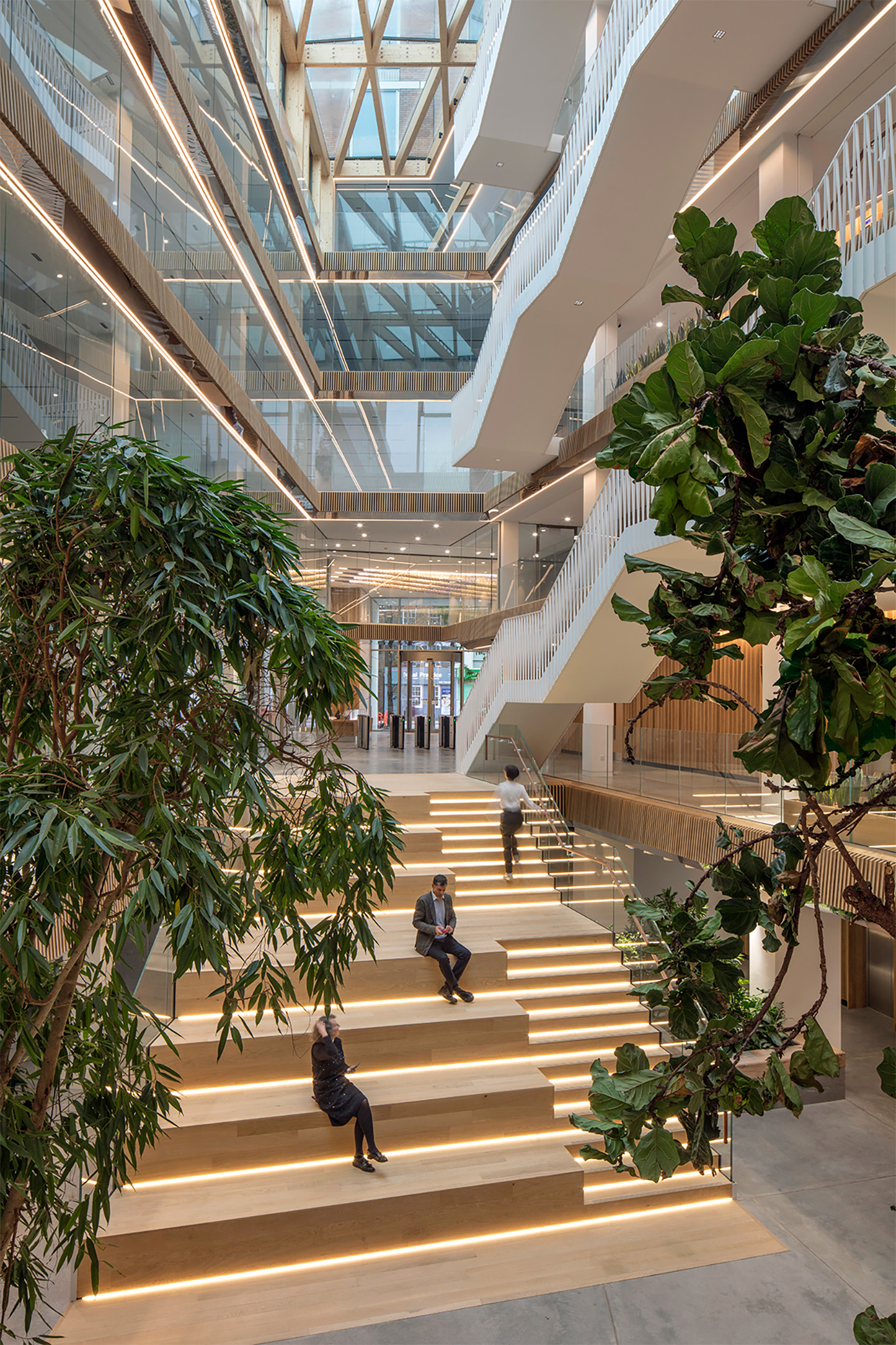
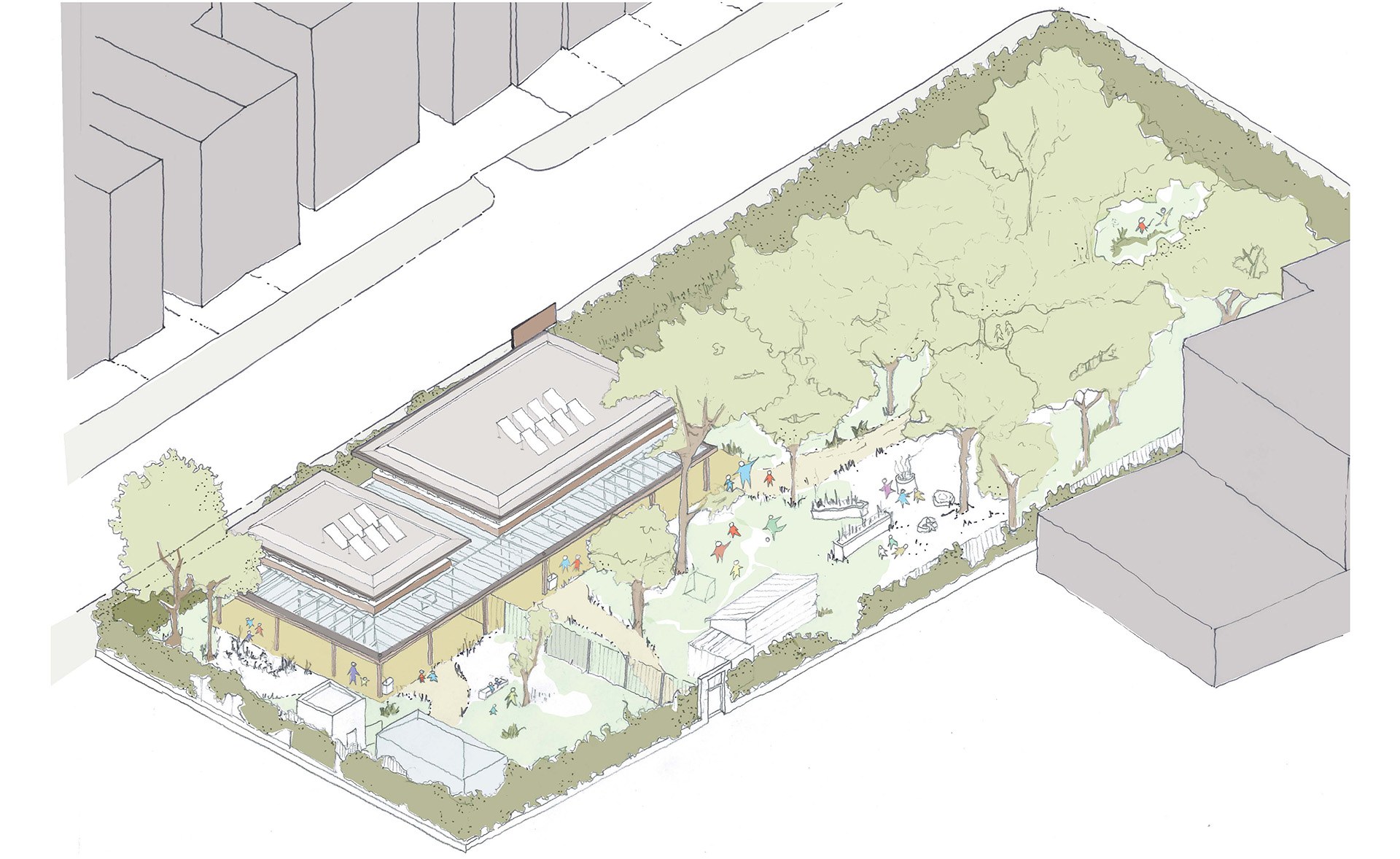
Learn more BeyondSustainability£1.655,660 in savings22 Baker StreetLearn more 577,000kg CO2eExemplar of Wellbeing
33% of structure retainedLearn more
& Nature in WorkspaceThe LanternOasis Nature Garden100% reused materials
Learn more West Somerset Lagoonrenewable energy
able to power 2m homes
120+ years of predictable
Learn more
“The circular economy is a system where materials never become waste and nature is regenerated. In a circular economy, products and materials are kept in circulation through processes like maintenance, reuse, refurbishment, remanufacture, recycling, and composting.” (Ellen MacArthur Foundation)
The Goal
To design out waste so that your projects/portfolio becomes part of the circular economy. This is the first step towards a long term strategy to achieve regenerative design goals. Regenerative design goes beyond sustainability to actively to give back - achieving long term environmental, economic and social goals of living within our planetary boundaries and allowing nature to thrive!
Beyond Sustainability and towards Regenerative Design
“Following the publication of the IPCC report (and the birth of my first grandchild) in October 2018 the urgency of the climate crisis really hit home to me – the world’s top scientists said we had twelve years to limit climate catastrophe! Since then, I have pivoted our practice to focus on positive solutions to meet the needs of our clients and society without breaching Earth’s ecological boundaries.” - Julia Barfield, 2025
The built environment’s current approach is falling short. Despite decades of sustainability initiatives, the UK construction industry is still responsible for 42% of national carbon emissions and 62% of all waste.
At Marks Barfield Architects, we go beyond sustainability — embracing regenerative design. This approach seeks to work in harmony with nature, operating within planetary boundaries to deliver environmental justice and enable the flourishing of all life for generations to come.
Achieving this is challenging, but on every project we look for meaningful, practical steps towards that goal. The case studies below show how we are putting regenerative design principles into practice.
Marks Barfield Architects have been recognised as “Front Runners” in the field by Architecture Today’s Regenerative Design Index - see article.
Circular Economy Consultancy Services: The Benefits to Your Organisation
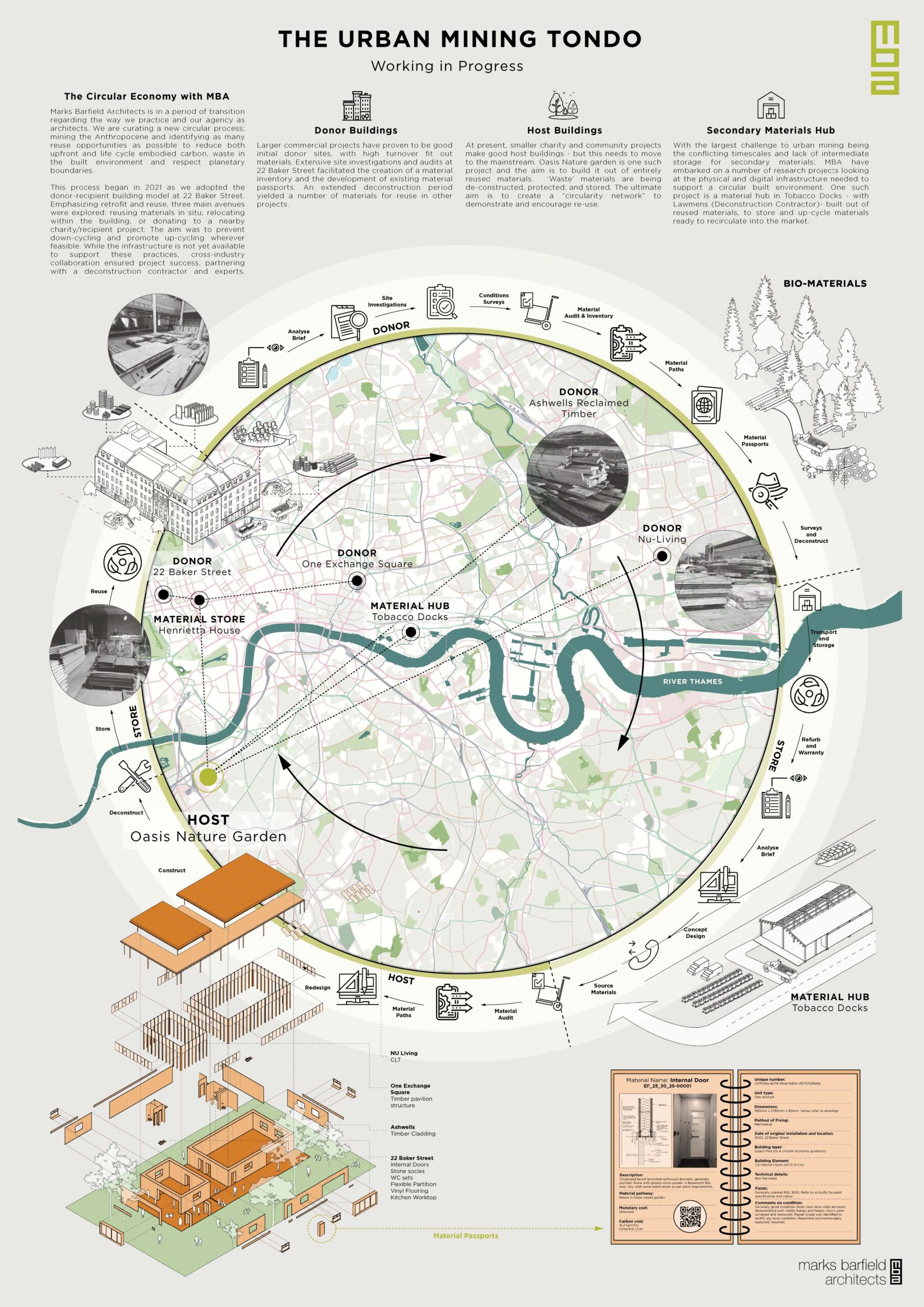
We have expertise in implementing material reuse at all scales including new builds and retrofits. Our network of deconstruction contractors, developers, designers, and consultants allow us to circulate materials between projects. This process is illustrated in our 'Urban Mining Tondo' where our projects become donors and recipients to one another. We are successfully overcoming the key challenges of material reuse - storage, programme, warranties/ insurance - by connecting industry specialists together and acting as material brokers.
What We Provide
• Creation of an estate-wide circularity strategy, unique to your portfolio, aims, opportunities and constraints • Access to our circular economy network to maximise opportunities for material reuse • Whole Life Carbon Assessments • Circular Economy Statements • Material Audits - to understand the reuse potential of your asset/s. • Material Passports - to enable future material reuse. • Upskilling your team in circular and regenerative design methodology
Case Studies
22 Baker Street
The Lantern
Oasis
West Somerset Lagoon
Warwick Avenue
The Reuse Pocketbook
Material Library
Cambridge Mosque
'Waste' material is just material in the wrong place!